
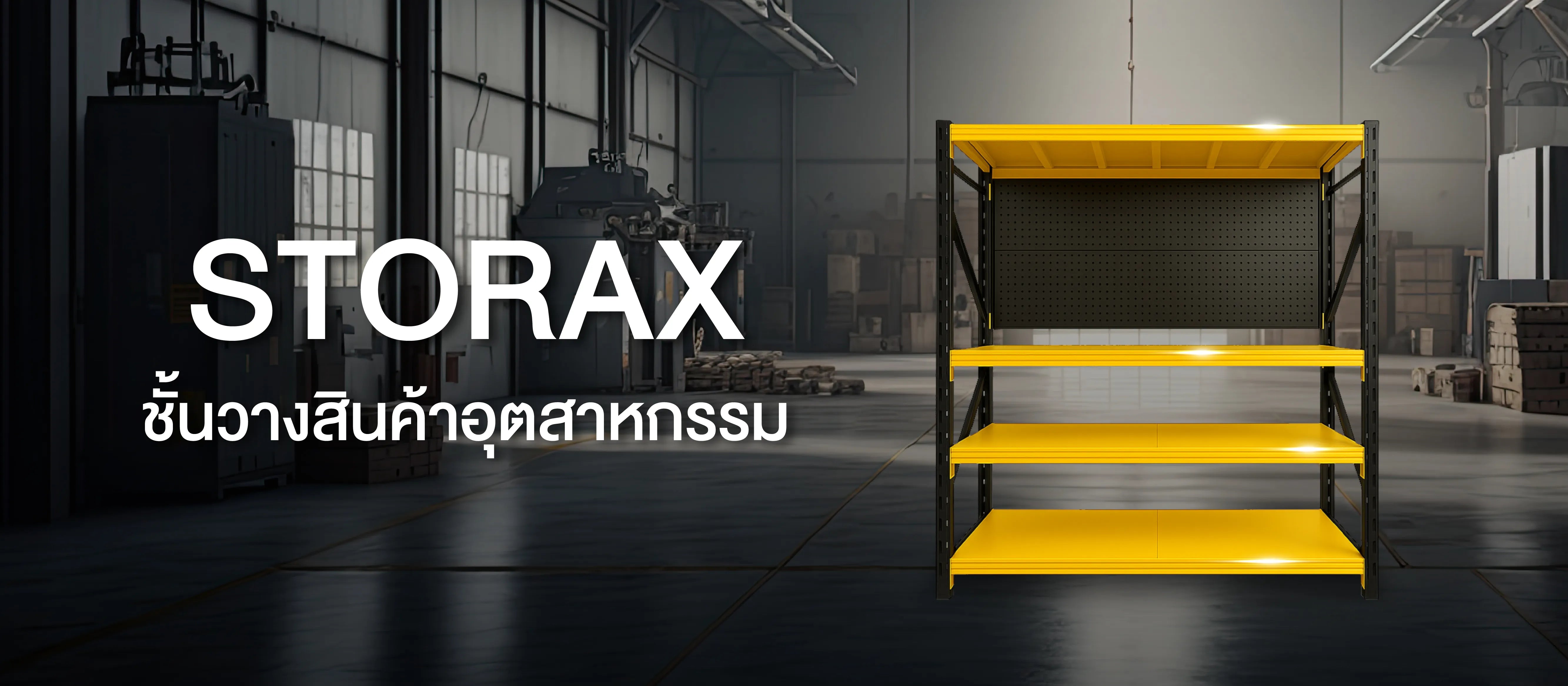
ชั้นวางของขนาดใหญ่ (Heavy Duty Rack)
2,890.00 ฿


STORAX
ชั้นวางอุตสาหกรรม
Backroom shelving is built for easy picking, organized storage, and quick stock checks. It supports heavy loads, maximizes vertical space, and features rust resistant adjustable shelves for cartons and fast moving stock.
Backroom shelving is a steel storage system designed for easy picking, vertical space saving, heavy duty loads, and adjustable shelf levels to fit different product sizes.


Most commonly suitable options are Selective Pallet Rack (for pallets & forklifts), Longspan Rack (for cartons and manual picking), and Mezzanine (to add vertical space). Choose based on load weight, number of SKUs, and the type of forklifts used in Thai warehouses.
It depends on the upright/beam specs and installation design. Check these 3 ratings: load per pallet, per level, and per bay. Always request the official load specification documents from the seller before real use.
The main causes are overloading, uneven load distribution (heavier on one side), damaged pallets or uneven pallet legs, or beam impact from forklifts. If deflection is visible to the naked eye, isolate the area and inspect immediately.
Fix the root causes: control humidity and standing water, wipe spills immediately, repair chipped paint promptly, and increase inspection frequency in high-risk areas (humid warehouses, coastal sites, chemical exposure). Pay extra attention to base plates and anchor-bolt holes.
Do weekly visual checks (impacts, paint damage, pallet issues) and monthly checklist inspections (beam deflection, uprights, base plates, bolts, safety pins). Increase frequency in high-traffic forklift areas.
Recommended for Thai warehouses: end-of-aisle upright protectors (end protectors), guard rails at turning points, pallet stoppers, and rear safety mesh/wire decking, especially for high-bay racks or areas near pedestrian walkways.
It depends on the forklift and turning radius. Ensure enough clearance to turn and lift without hitting uprights or beams, and have the installer confirm the layout and turning clearance based on the actual forklifts used on-site.
You should request documents specifying load per level / per bay, upright & beam specifications (model/thickness), a list of safety accessories, warranty terms, and the layout drawing. If the price is “very cheap” but the specs are unclear, it often means reduced thickness or missing safety components, which increases risk.
It’s worth it only if the original specs are known, damage and deep corrosion are checked, and spare parts are available. If the history is unclear or there’s severe bending or dents, it’s not recommended for heavy or high-bay use due to higher risk.
Make it into 5 steps: stop using that bay, isolate the area, unload/move items safely, inspect the upright/beams/base/anchors & bolts, and replace parts to spec (no DIY modifications) — then identify the root cause and add guards/bumpers or adjust traffic routes to prevent recurrence.


